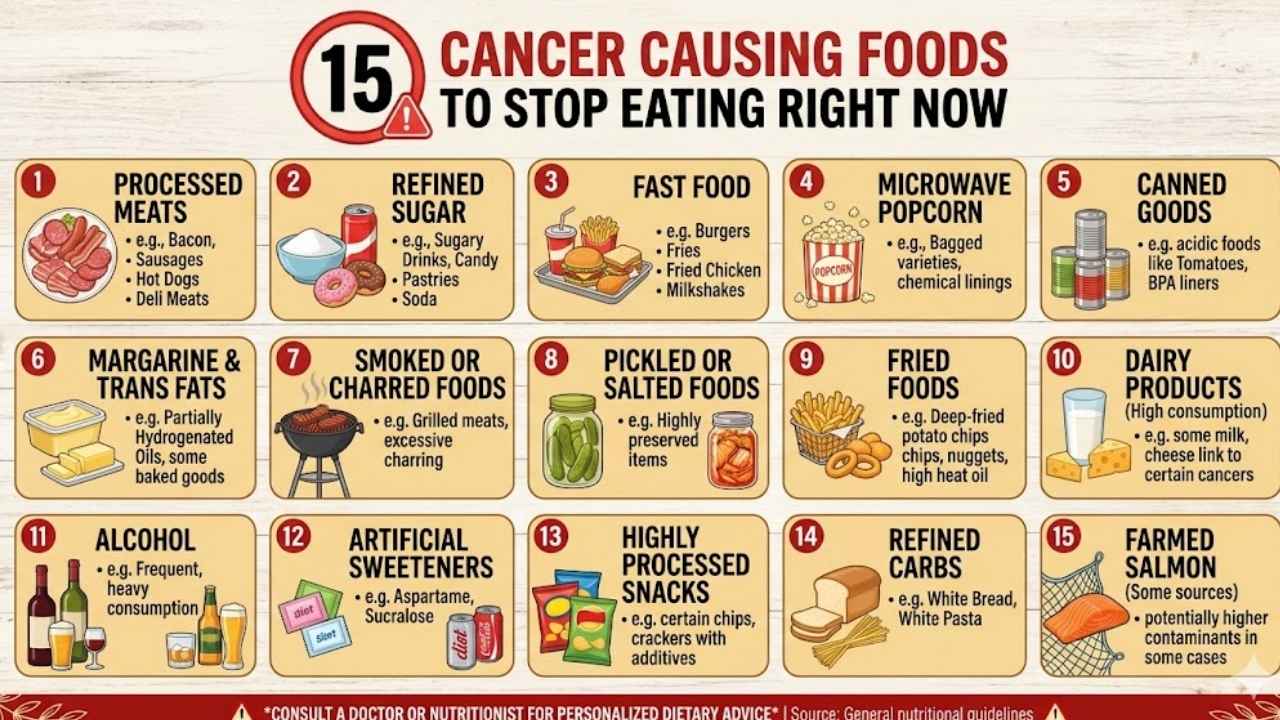
15 Cancer-Causing Foods: What you eat every day plays a powerful role in your long-term health. While many foods appear harmless, some contain hidden compounds that may increase the risk of serious diseases, including cancer. Modern diets, especially in the USA, are filled with processed and chemically treated foods that can quietly impact your body over time.
High Risk Foods Linked to Cancer
| Food Item | Main Risk Factor | Healthier Choice |
|---|---|---|
| Processed Meat | Nitrates and preservatives | Fresh chicken or fish |
| Red Meat | HCAs and PAHs from cooking | Plant-based proteins |
| Sugary Drinks | Obesity and insulin spikes | Water or natural juices |
| Refined Carbs | Blood sugar imbalance | Whole grains |
| Microwave Popcorn | Chemical coatings | Air-popped popcorn |
| Fried Foods | Acrylamide formation | Baked or steamed foods |
| Alcohol | Cellular damage | Limited intake |
| Packaged Snacks | Artificial additives | Homemade snacks |
| Canned Foods | BPA exposure | Fresh or frozen foods |
| Artificial Sweeteners | Chemical processing | Natural sweeteners |
| Charred Foods | Carcinogenic compounds | Low-heat cooking |
| Fast Food | Trans fats and preservatives | Home-cooked meals |
| Pickled Foods | High salt and preservatives | Fresh vegetables |
| Farmed Fish | Contaminants | Wild-caught fish |
| Hydrogenated Oils | Trans fats | Olive oil or coconut oil |
Many of these foods are part of everyday meals, making it even more important to understand their risks. Awareness allows you to make better dietary decisions and reduce long-term health complications.
Processed Meat and Cancer Risk
Processed meats like bacon, sausages, and hot dogs are widely consumed but often contain harmful preservatives. Nitrates and nitrites used in these products can form compounds that may damage cells and increase cancer risk, particularly colorectal cancer.
Evidence from Research
Health organizations have reported that frequent consumption of processed meat is associated with a higher likelihood of colorectal cancer. Even moderate daily intake can raise the risk over time.
How to Reduce Risk
Limit intake of processed meats
Choose fresh and minimally processed protein sources
Avoid high-temperature cooking methods
Red Meat and Its Impact on Health
Red meat such as beef and pork can contribute to cancer risk when consumed excessively. Cooking these meats at high temperatures creates harmful compounds that may damage DNA.
Scientific Findings
Research indicates a connection between high red meat consumption and cancers such as colorectal, pancreatic, and prostate cancer.
Safer Choices
Eat red meat in moderation
Switch to lean meats or plant-based proteins
Use gentle cooking methods
Sugary Drinks and Obesity Link
Sugary beverages like soda and energy drinks are high in added sugars, which can lead to obesity. Obesity itself is a major risk factor for several types of cancer.
Health Insight
Regular intake of sugary drinks contributes to insulin resistance and inflammation, both linked to cancer development.
Better Alternatives
Drink water or infused water
Choose fresh fruit juices in moderation
Microwave Popcorn and Chemical Exposure
Microwave popcorn bags may contain chemical coatings that raise health concerns. Artificial flavoring agents can also introduce unnecessary risks.
Research Overview
Some studies suggest that certain chemicals used in packaging may have harmful effects when exposure is frequent.
Safer Options
Use air poppers or stovetop methods
Add natural seasonings instead of artificial flavors
Fried and Charred Foods
Foods cooked at very high temperatures, especially fried or charred items, can produce harmful compounds that may increase cancer risk.
Risk Factors
Acrylamide and other compounds form during high-heat cooking, especially in starchy foods.
Healthier Cooking Methods
Bake, steam, or boil foods
Avoid overcooking or burning
Alcohol and Cancer Risk
Alcohol consumption has been linked to multiple types of cancer, including liver, breast, and esophageal cancer.
Key Insight
Even moderate drinking can increase risk over time.
Safer Practice
Limit alcohol intake
Choose alcohol-free alternatives
Packaged and Ultra Processed Foods
Highly processed foods often contain artificial additives, preservatives, and unhealthy fats that may negatively affect health.
Why It Matters
Long-term consumption can lead to chronic inflammation and increased disease risk.
Better Choices
Prepare meals at home
Choose whole, natural ingredients
Final Verdict
Making smarter food choices is one of the most effective ways to protect your health. While it may not be necessary to completely eliminate all these foods, reducing their consumption can significantly lower your risk. A balanced diet focused on fresh, natural, and minimally processed foods can support a healthier and longer life.
Disclaimer
This content is for informational purposes only and should not be considered medical advice. Always consult a healthcare professional or nutrition expert before making major dietary changes. Individual health conditions and risks may vary.